Maximise your solar energy system with ecoSOLAR
Enjoy high export rates for your excess solar
To make the most of your solar energy system, you want to be paid the best rate for any excess energy you export to the grid.
With our ecoSOLAR plan you will be paid 21c/kWh all year round for any energy you sell during peak time, which appears as a credit on your power bill.
BENEFITS
Why choose ecoSOLAR

Time-Of-Use export rates
Get paid a competitive peak buyback rate of 21c/kWh for excess solar energy
Fixed import rates
Enjoy fixed import rates of 18c/kWh (Low User) or 17c/kWh (Standard User) for any energy you purchase

Climate positive
Power your home with Toitū certified climate positive energy
What are Time-Of-Use rates?
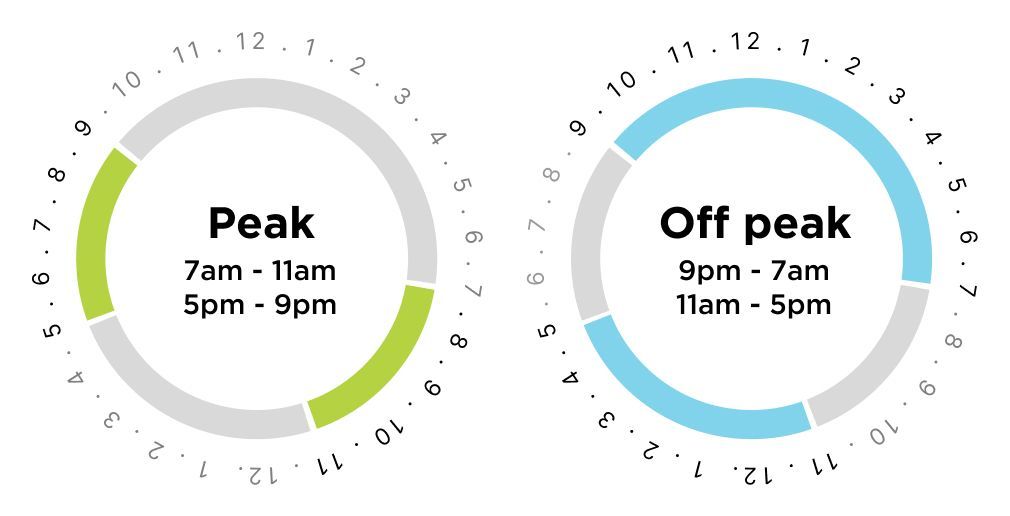
Time-Of-Use pricing means you get paid different rates for the energy you export and import to and from the grid, depending on the time of day and whether it's in a peak or off-peak period. It's different from fixed rates where you get paid one rate, regardless of the time of day. Check out the clock to see an example of the peak and off-peak times at Ecotricity. Please note your network's peak and off-peak times may differ.
TIPS
How can I make the most of Time-Of-Use rates?
Here are some tips on how to maximise your savings
-

Time your appliance use
- Use high-energy appliances, like dishwashers and washing machines, during off-peak periods to minimize costs
-

Charge your EV overnight
- Charge your electric vehicle overnight during off-peak hours when electricity rates are lowest
-

Maximise your battery
- If you have a battery, store your excess solar energy to use during peak periods when energy prices are the highest.

THE ECOTRICITY DIFFERENCE
Why join ecotricity

Climate positive certified
Power your home with Toitū certified climate positive energy
Nationwide solar installer partners
We work with certified installers across New Zealand

Leading electricity plans for solar
Over 20,000 solar customers trust us with their energy

No fixed contracts
Switch anytime with no exit fees and always know what you're paying
-

Customer stories
Daryl Mitchell’s Solar Journey: From grid to green
Discover why Daryl and his family started their solar journey to make their everyday living more sustainable and futureproof their home's energy security.
Learn more about solar

Find a trusted installer
INSTALLER MAP
The best power plan for your solar energy system
READ MORE
Is your property solar ready?
SOLAR CHECKLISTFAQ's
Got a sunny question?
Yes. If your solar exports have put your account into an overall credit balance, you’re welcome to request a refund.
When you install solar panels, you're generating electricity that you would otherwise have to buy from the grid. That reduces your electricity import from the grid, so your bills go down. There's an upfront cost: solar systems in NZ generally cost NZ$10,000–$30,000 depending on size, usage, type, etc. Adding a battery increases cost but gives benefits (e.g. storing excess solar to use in evening or during outages). Over time, that upfront cost is “paid back” by reduced bills plus credits you get for any solar you export (i.e. don’t use yourself) to the grid. We estimate a payback period of around 7–9 years for many systems.
Also the savings are seasonal: more solar generation (hence more benefit) in summer, less in winter.
You need to have an import/export meter installed at your site. This is needed to measure both how much electricity you import from the grid and how much you export. Ecotricity arranges for this via your solar installer. Once you have that, your retailer (Ecotricity in this case) credits you for exported electricity under a buy-back/export tariff.
Smart meters report consumption (and import/export) data in half-hour intervals and then transmit this data daily to the metering company, which then passes it to Ecotricity. The data might take a few days to fully sync.
If there’s lag in data upload (communication delays), or if your solar app shows data from your inverter rather than the meter (inverter shows what panels are producing in real-time, but that might differ from what the meter records/export/import), differences can appear.
Also depending on which period your bill covers (meter readings) vs what period your app is showing (often real-time or recent), they may not align exactly.
You’ll see charges for:
-Imported electricity (the power you draw from the grid when your solar isn’t producing enough).
-Fixed daily or connection charges / network/lines charges and other variable charges like meter charges, GST etc.
-If you have solar and are exporting, you’ll also see credits for exported energy. Those will offset (reduce) your total bill.
If you are on a time-of-use plan (which many solar customers are), there will be different rates depending on when you use or export electricity. Peak vs off-peak periods. Ecotricity’s ecoSOLAR plan uses this scheme.
Check out our video on "How to read your power bill".